
As doctors it is our job to consider the conditions that affect our patients within the context of scientific research and available evidence, regardless of whatever current anti-science rhetoric or misinformation is trending this week. However, I will never forget the first time I considered my own personal life through the lens of research. I had recently been working on a rough draft of a memoir, so my childhood memories were somewhat recently unearthed from my subconscious. I sat in a room with dozens of other physicians and researchers, as we were listening to a presentation on the proposed California screening initiative for childhood adversity and trauma. It was the first time I had ever seen the validated screening questionnaire for Adverse Childhood Experiences (referred to as ACEs). From the giant projected slide, the ten question screener stared me down, as I realized that I scored a nine out of ten. Spoiler alert: this isn’t a ‘highest score wins’ scenario. It is really more of a ‘less is more’ vibe with a goal of zero. But what did this number even mean? Well, research dating back nearly thirty years, demonstrates that ACEs are associated with numerous health outcomes in adulthood, including asthma, type 2 diabetes, cancer, autoimmune disorders, chronic respiratory conditions, cardiovascular disease and stroke, substance use disorder, PTSD, ADHD, and mood disorders, such as depression and anxiety. And there is a dose-dependent response, in that the more ACEs you experience, the more likely you are to develop these conditions, in addition to potentially reduced life expectancy. Not really the type of lotto I was hoping to win.
So as I sat there staring at the screener, I immediately felt extremely self-conscious. It felt as if I was broadcasting my score in a little thought bubble floating above me that everybody could see. For added effect, I was relatively new to that institution and still did not know very many people yet. Now the speaker went on to make the point that by building resilience, these future poor health outcomes do not necessarily have to come to fruition. And clearly my lived experience, despite a meandering and obstacle-laden journey, has shown that to be the case. That said, I did have cancer and numerous (double digit) surgeries. Nonetheless, I have always considered myself relatively lucky. After all, cancer led me to my career in medicine.
However, I had never been able to fully reconcile some of the other traumatic life experiences with my “everything happens for a reason,” mindset. But sitting in that room that day, feeling self-conscious, turned out to be the first step in transcending those experiences and turning them into something much bigger than myself…and much bigger than my trauma. I spent the next several years working within this particular niche in pediatrics, and I ultimately launched Transcend Clinic, a resilience building clinic, which aims to help patients and families identify and bolster existing strengths while learning more about the lifestyle aspects of resilience. The hopeful part about focusing on lifestyle is that people tend to have more control over this than they do over the social drivers of health (particularly the economic drivers).
My first Transcend patient was about 2 1/2 years ago, and it has been an amazing, fulfilling experience. And while I have enjoyed helping families connect to resources and work on nutrition, exercise, sleep, mindfulness, and access to green spaces and community/cultural events, there is one pervasive issue that I cannot ignore. There is only so much resilience to be built through lifestyle changes and mindfulness. As I always tell residents and students during my lectures, “there is no pulling yourself up by bootstraps, if you don’t have any boots.” There is a gnawing, haunting, heavy reality that follows me from room to room, patient to patient. The hardest part of my job remains helping people find and access resources for social drivers, such as food, housing, childcare, transportation, behavioral and mental health resources, educational services, and safe and/or adaptive green spaces. Yoga and meditation only goes so far when you are unhoused, hungry, and fearing deportation. You cannot deep breathe or exercise your way out of abject poverty. And while I’ve spent my career trying to raise awareness and advocate, this must be addressed at the larger societal level. Healing trauma, one patient and family at a time is one thing, but I would rather envision a world in which we do not require so much resilience of people.
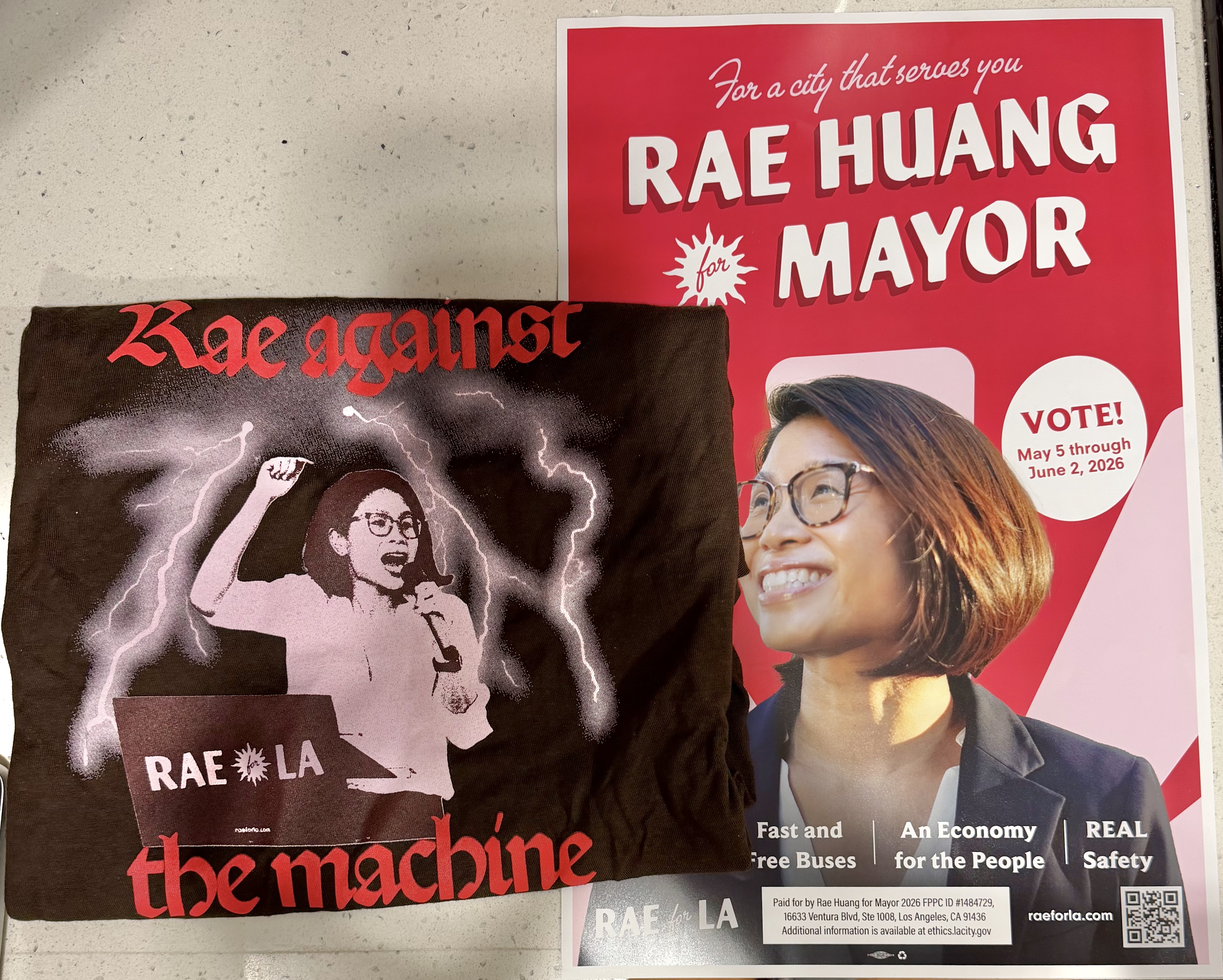
This is why I started volunteering for Rae Huang’s mayoral campaign. She is truly the one candidate who has actionable and feasible plans to best address the things that affect my patients, who remain some of the most vulnerable patients in Los Angeles. And while it is no secret that healthcare workers are exhausted and, at times, question why we continue to try to help people, despite oppressive systems of care that sometimes harm more than they help, there is still hope. And I honestly believe that hope has its best shot in the hands of Rae Huang, who truly has the best interest of Angelenos at the core of her policy platform. As a pediatrician, as a mother, and as someone who spends many of her days in service of the most at risk and marginalized Angelenos, I pray that you vote with these children in mind. I know I will be voting for Rae for LA!
Please note, any and all opinions expressed here are my own and not that of my employer.

