ICE Cold

Why are you always so political? Don’t you ever shut up about this stuff?

No. Not really. I do not.

Advocacy is both a privilege and, some days at least, an occupational hazard inherent to the practice of pediatrics. When we choose to enter the field of pediatrics, it is something that we sign on for, and typically wholeheartedly and knowingly. As such, most of us operate at the intersection of public health and social justice on a daily basis. It is who we are as pediatricians.

So I’m going to need everybody to temporarily suspend their disbelief and stop acting brand new when you see pediatricians, in particular those that advocate loudly for collective liberation, raising their voices on behalf of children and families. While I would argue that being a person is innately political, especially in our current climate, being a pediatrician has always been political and likely always will be.

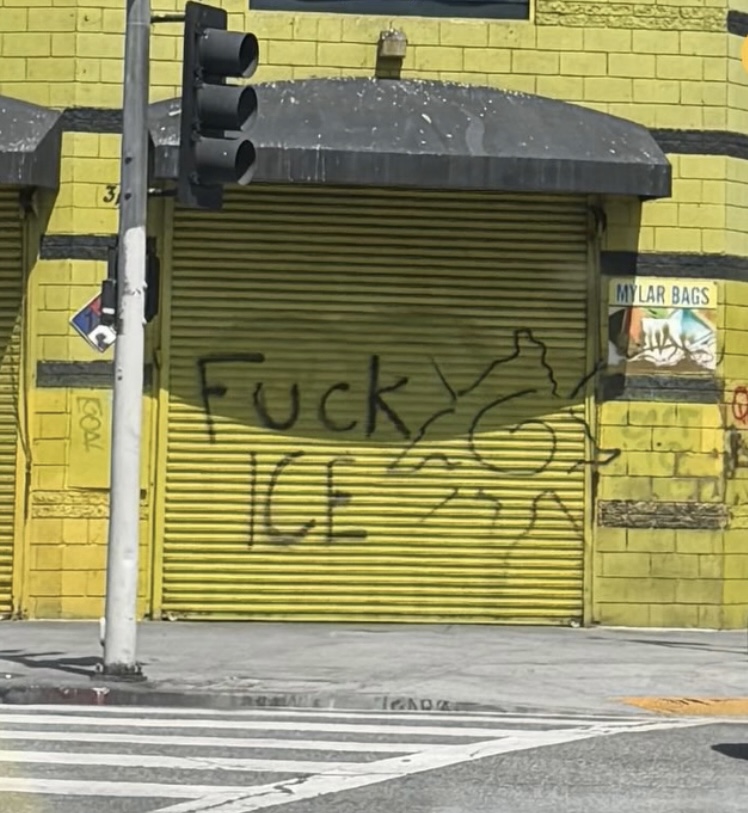
As someone who runs a resilience building clinic in one of the largest federally qualified health centers in the country, and as an Angeleno, the recent ICE raids have been deeply gut-wrenchingly disturbing, personally and professionally. My niche is trauma and resilience building, which forces me to confront the layers of complexity and nuance that go beyond simply ripping families apart, which of course should be reason enough for distress. 

Now you might be asking yourself why I choose to run a resilience building clinic. Isn’t talking about and/or thinking about trauma a set up for perpetual burnout, moral injury, and compassion fatigue? Perhaps. But as I tell our pediatric residents,  when practicing the art of medicine in a sustainable fashion, it’s necessary to examine our “why.” So it’s something that I’ve spent a lot of time thinking about and talking about in recent years. Without forcing you too far down the rabbit hole of research, I will try to be as succinct as my typically verbose self will allow. For starters, we know that adversity and trauma can predispose to a number of health outcomes in adulthood, everything from asthma, obesity, cancer, type two diabetes, mental health issues, cardiovascular disease, autoimmunity, and many more. But we also know that resilience building, especially that which is focused on resources, social determinants of health, and education about lifestyle and facets of resilience (diet, exercise, mindfulness, nature, community, etc) can help mitigate some of these poor health outcomes in adulthood. So simply put, I do what I do because I know that it can help make a difference for my patients long after they walk out of our pediatric clinic for the last time and embark on adulthood. 

Helping patients and families build resilience, despite having experienced unspeakable trauma, is one of the most rewarding things I’ve done in my lifetime. But damn if this current dystopia isn’t making it really hard to help people in the setting of a major source of ongoing trauma, ICE raids and the threat of deportation.

And the inconvenient truth of intersectionality, means that adversity does not occur in a vacuum. Unfortunately, it occurs in the milieu of all of the other sources of stress, adversity, and inequity for families. Even putting all that aside and focusing purely on deportation-related trauma, it behooves us to remember that this also occurs against the backdrop of likely migration trauma, which we know is a common phenomenon in our community. Not to mention the trauma and adversity that was likely the impetus for a family fleeing, and/or potentially seeking asylum in the first place. When you then factor in intergenerational trauma, you can see how each layer compounds the baseline toxic stress. Now enter stage right a new(ish) horror, the trauma of ICE raids and subsequent parental estrangement, and the compilation of adverse events is truly dizzying. And unfortunately, these adverse events act in a dose-dependent fashion, increasing even further the likelihood of poor health outcomes in the future. Plus thanks to a phenomenon known as epigenetics, the sequelae of these events can be inherited and passed on for generations to come at the literal DNA level. Why do I feel like I’m filming an infomercial for bonus trauma? “But wait, there’s more…all for the low cost of free ninety-nine.”

Now some of you need no reminder, as you tirelessly raise your voices for collective liberation, heavy on the “collective.” But for everyone else, here is a quick and dirty refresher. We are on stolen land. We exist through the legacy of enslaved people. Apart from indigenous people, we are all either immigrants or descended from immigrants. 

If we want to truly embody empathy and fight for equity, it necessitates dismantling systemic oppression. There’s not really a way around that. Unfortunately there is no shortcut here.

Many of the laws governing our carceral system are rooted in white supremacy. ICE is rooted in white supremacy. 

Anti-intellectualism/anti-science has always been a tool of white supremacy. They use it because it works. The only way to combat that is with knowledge and data. Likewise, deflection and distraction are age-old tools in the white supremacy tool kit. We must not let them control the narrative, as we’ve seen all too often how it takes on a life of its own, eclipsing the real issues. No doubt you have noticed that burglary is simply regarded as “burglary,” except when it occurs in reasonable proximity to anyone fighting for social justice. Then it is magically “looting.” And as I began to experience again this weekend, Overwhelm is also a tool of white supremacy. It is intentional. But as a very wise colleague reminded me, we can’t let the overwhelm consume us, but rather must focus on what it is that we can control. So as for me, apart from advocating, raising awareness, and droning on about trauma, I can continue helping individual patients and families build resilience. And perhaps if I have any strength left, I can find it within me to continue to hope for an eventual future that does not require so much resilience of people.
Philosophizing in the Rearview

When reflecting on 2022, there were moments so crazy that it’s almost easier to close the door firmly on the year, lock it,  and never look back. As I waxed poetic in a prior post, “don’t look back….your direction is forward.” But, for better or worse,  my insufferable inner philosopher simply will not allow for that. So here I am, forced to at least partially process the year that lay behind me. Truth be told I suppose the same could be said at the end of any year, because who amongst us truly lives a boring life? No one? Yeah, I didn’t think so. 

Since I can’t cheat the proverbial process, I decided to revisit some of my prior musings on the topic of finding meaning…aka making some minimal fucking sense of the chaos. In general it appears we choose one or more of three options when reflecting on life experiences. 1. We can choose to believe that a higher power, such as God, the universe, or karma “made,” our life events happen, perhaps (to take it a step further) even as a reward or punishment for various things. 2. We can choose to believe that a higher power “allowed,” for certain events to transpire, in the backdrop of other notions, such as having free will or being subject to the laws of nature/science. 3. We can choose to believe that events are merely due to chance, and that events are either random lucky, or unlucky, occurrences. 

The most important point, though, is that each one of us has a choice to make. And it is that very choice that can help us transcend from merely surviving life and it’s various events to thriving, because of those events. The use of the word, “because,” instead of “despite,” is intentional, though I sometimes think of them interchangeably. In the past I used to think “despite X circumstance, I accomplished Y.” And there are definitely times during which that was the case. For instance, despite my child’s blood sugar dropping precipitously during our morning commute, I still made it to work in time for my first patient (albeit a few minutes later than intended). But there are other instances in which I, like all of us, accomplished something because of some adverse event. These are usually the cases in which our path was altered in a different direction due to some experience. It’s not the same as starting a task, getting derailed by an event, and getting back on that same track. Rather, it is when we pursue something, find ourselves derailed, and use that derailment to veer in an entirely new direction. It involves a conscious choice to take what we have learned from that adversity, incorporate it into the larger schema of who we are, and allow it to propel us in a new direction. 

I firmly believe that if I chose to believe option two, that some higher power “allowed,” for life events, within the confines of free will and nature/science, then I can at least begin to find meaning in even the worst experiences. This mindset causes me to reflect on occurrences and trust that something/someone bigger than me felt that I could endure said event and have the opportunity to learn from it. As such, I might even have the potential to show empathy and/or pass on knowledge to others. 

This concept also forces me to consider the role of free will and examine my role in an event, thereby keeping me accountable. And it reminds me to consider the autonomy and free will of others, which highlights the roles they may have played in my experiences, helping me discern which things were beyond my control. Hopefully, this aids in self-forgiveness and mitigating shame. However, being simultaneously accountable for our actions and aware of our limitations takes a tremendous amount of insight and practice. Likewise, with certain events, contemplating the role of nature/science humbles us by reminding us again of what we can and cannot control and of the importance of being prepared. Furthermore, belief in a higher power guiding our experiences can foster gratitude for the times when the free will of others resulted in helpful, kind, supportive, and loving acts towards us, as well as thankfulness for times when science and nature are cooperative in our lives. 

And the mere act of believing, in and of itself, is very powerful. Belief takes hope one step further. Hope is rooted in wanting or desiring something and, as such, entertaining it as a possibility. To believe involves taking potential and knowing, at your core, it can be actualized into reality. It is what we do when we not only put something out into the universe, but we know it can be. We can visualize it. It propels us forward and helps buffer hardship.

Now does this mean choosing this option is the best possible choice, purely because I (a random stranger with zero authority on the subject) say so? Um no. Absolutely not. It is honestly one person’s mildly convoluted, meandering opinion amongst many. Am I being overly dismissive of options one and three? Probably, though it is mostly for the sake of brevity. And just because I choose to believe this way, it does not mean I have remotely come close to mastering the process of sorting through the stuff of life and ascribing meaning or using those experiences to better myself or others. To say that cultivating these skills is a work in progress is a gross fucking understatement. I still have a tremendous journey ahead of me and a lot of work to do. And although some days I feel I have come a million miles in my somewhat short life, other days I feel as if I have so much more to do…as if there is so much more in me to give. There are still seemingly countless things I long to do and see and accomplish.

However, regardless of those things I have penciled in my own agenda, I will have to remind myself to be open to the events and people that are part of a higher agenda. Because sometimes those serendipitous detours are the exact things that, rather than merely lead us to where we need to be, help us become who we need to be. For that reason alone, I can be grateful for every bump in the road, even those that humbled me more than expected. And I do feel extremely blessed that amidst the year’s chaos were some amazing, blissful moments of connection with friends and loved ones that made it not merely just bearable but worth it all. Happy New Year! May this next year be filled with growth, blessings, and love. 

Time Travel Jet Lag: Unpacking 4 Different Perspectives

TW: sexual assault, abuse

I am not sure if it was the serious jet lag from twenty-four hours of transit across nine time zones, or the rough reentry and integration back into anything-but-normal life. Or perhaps it was the brutal stripping away of female reproductive rights and the threat of repealing so many other human rights, all whilst ensuring that the leading cause of death in children will continue to be gun violence. Who knows? Could be a combo of all of these. In light of these dystopian gems, plus life in general right now, perhaps it is not surprising that it has taken me a full week to process just the tip of the iceberg of emotion brought on by the events of this past week. 

But as a pediatrician whose clinical niches are trauma/adversity, resilience, and equity, as well as children with medical complexity… and as a survivor… it is time to emerge from the brain fog of this past week. Personally and professionally there are so many layers of this to unpack, that it made unpacking the actual luggage from my recent trip seem far less daunting by comparison. And like all unpacking, there is bound to be at least a little dirty laundry. 

One of the realities of caring for children with special healthcare needs is that for a certain subset of my patients, a pregnancy could be catastrophic, resulting in death of both my adolescent patient and the fetus. Additionally, my patients with intellectual disability, severe autism, or other neurodevelopmental disabilities are already at higher risk of sexual assault, which is, in and of itself, a terrifying experience for them. Now try to imagine the added horror of becoming pregnant for a patient with limited cognition and/or traditional verbal capacity. My own mind cannot process that fully. Maybe it’s the jet lag.

Furthermore, and please bear with my science nerd perspective for a minute, my work in trauma/adversity, resilience, and equity is aimed at the goals of screening for these factors and helping patients and families build resilience, nurture buffering caregiver/child relationships, and address disparities in social emotional determinants of health (food, housing, transportation, insurance, & other financial or social justice issues). Without going too far down the physiology rabbit hole, adverse childhood experiences (referred to as ACEs), especially when unbuffered and untreated, can lead to chronic activation of the stress response. And that constant “fight or flight,” dynamic can lead to future poor health outcomes such as asthma, obesity, cardiovascular disease, high blood pressure, cancer, depression, anxiety, substance use disorders, and others. As such, childhood adversity poses the single greatest threat to the future health and well-being of our children. To add intergenerational insult to injury, trauma can cause actual changes in the DNA (referred to as epigenetic changes) that can be transmitted to future generations; an ancestral curse in the truest sense. Thus, by forcing a mother to carry an unwanted pregnancy, with its implications for intergenerational poverty and widening disparities, especially within the BIPOC community, our country is actually legislating trauma and adversity for our patients and future generations. I certainly did not order the trauma special with a side of racism, so if you could take it off the menu, that’d be great!

As if all of that is not ominous enough, there are still a few other layers worth unpacking. Please excuse me while I take off my white coat and scrubs for a moment to lend a different, more personal, perspective. In other words, it’s about to get a little more real.  When I was in my third trimester with my youngest child, I noticed a small growth at my jawline. Initially thinking it was probably a pimple, and given I was on bed rest, it was convenient to simply ignore it. However, it never really declared itself as a pimple, and it persisted and grew, likely thanks to all those fun pregnancy hormones. It turns out that what I had initially dismissed as a pimple, ended up being a rare tumor (now my second rare tumor…but who’s counting?). I was fortunate that it was at the end of my pregnancy, it was relatively slow growing, and it had not metastasized–a trifecta of oncologic good fortune. Under different circumstances, I could have had an extremely difficult decision to make. It is a decision that no mother should ever have to make, but unfortunately it is all too common amongst cancer survivors. Having begun my cancer journey at age eleven, I am grateful to have lived long enough to have three wonderful children. I cannot imagine if that cancer journey had ended during pregnancy, which is now a very real possibility for so many others.

However, cancer survivorship is not the only meandering journey I have traversed (aka stumbled through) in my life. When it comes to vocations, whether due to comfort or serendipity, sometimes you organically find yourself doing what you know. One reason I have gravitated toward work in adversity and trauma is because I, like many of you, have had a little too much experience doing the hard work of overcoming my own past traumas. While those experiences, and the difficult work of surviving and transcending them, are in the past, there’s nothing quite like having your reproductive rights stripped away to remind you of all you have endured. 

By the time I reached double digits, I had been sexually abused, and by the time I reached 20 years of age, I had been raped twice. I was extremely fortunate that I did not end up pregnant, but I cannot begin to imagine how much more difficult my healing journey would have been had I been forced to carry a rapist’s baby. Honestly there are days that I still wonder how I survived abuse, rape, poverty, and cancer to be where I am at today. But then there are other days…days in which the residual sequelae of past trauma are just perceptible enough, at least to me, to remind me that survivorship is a lifelong journey. By the grace of God, the Universe, karma, ancestors, holy water, a lucky penny, and favorable winds, that journey has allowed me to live a life that ensures those past experiences were not in vain. But I can say with reasonable certainty that my ability to not only heal, but to utilize past adversity to ultimately help others, would have been severely impacted by forced pregnancy. So the work of advocacy and activism must be tireless to ensure that every woman has that same chance to not only survive but thrive, despite the intergenerational cycles of trauma and poverty that just became that much harder to break. To that end, it is time to unpack the luggage and get to work, because this jet lag ain’t got nothin’ on time travel back to 1973!

Photo Credit: https://www.zacharyleeportrait.com/

An Open Letter to my Children

At the end of one of the busiest weeks I have had in recent memory….a week for which there is no adequate word in the English language and “insane” cannot begin to do justice…I paused. There were a number of reasons to pause at that moment, but the reason I chose was that I owed my center offspring a conversation. As we spoke, I told him how proud I was of something he had recently done, but he stopped me mid-sentence. “Mom I know.” I tried to continue, tried to tell him that I am always proud and why I hold him to such a high standard. But he stopped me again. “ Mom (more emphatically)…I know! I literally have the letter you wrote me on my birthday here on my desk.” 

Later I reread that letter (which is conveniently my blog entry from a year ago) and mused to a few friends that maybe I should take my own advice. Suddenly, I remembered that I had penned the beginnings of a letter to all three of my kids but had never quite completed it. And just like that, the Universe had spoken. In a week filled with deadlines, check boxes, and turning pages, it was time to finish what I had started. 

An open letter to my children…

First off, I must acknowledge that I know that you will not heed all of this advice. As your mother I fully expect you to ignore many of these suggestions, the same way in which you ignore the first six times I ask you to do pretty much anything. But joking/parental snark aside, some things you will simply need to learn on your own. And that is OK. My hope is that if you must experience some things firsthand, perhaps the knowledge gleaned will endure within you. That said, it is perfectly acceptable to need to learn and re-learn these lessons. You will backslide. That is also OK. Be gentle and patient with yourself. As long as you honor your authenticity, continue being a good person, and your overall trajectory is forward, that is what matters most. 

1. I am proud of you, and I will always love you… beyond measure, no matter what. If you know nothing else, know this.

2. You are now and will ALWAYS be enough. Always be yourself. If someone does not appreciate who you are as a person, they do not belong in your life. Period. This does not mean that you shouldn’t strive for personal improvement or embrace needed changes throughout life. What you do not change, you choose. But such changes must be congruent with your core values.

3. Your worth will NEVER be diminished by someone else’s inability to see it. Do not waste your time trying to prove your worth to someone who is incapable of seeing it. Run, do not walk, away. 

4. Be honest and transparent ALWAYS. There is never an excuse for lying. Integrity is everything. It really is that simple.

5. Action always expresses priority (I remain eternally grateful to Gandhi for the reminder). Make sure your actions align with your words. And never forget that inaction can be as powerful a choice as action. So choose wisely.

6. Be very mindful of how you spend your time, energy, and effort. You have the power to cultivate the life you choose.

7. NEVER diminish yourself to make someone else feel comfortable. If you are “too much” for someone, walk away and let them settle for less. You are not meant to be diluted.

8. Sometimes doing the right thing will be among the hardest things you will ever do. The path of least resistance is very often the wrong path. Choose the other path….that’s your path…and put in the work, even when it’s difficult. 

9. Never forget who you are or where you came from. Let the things that you have transcended form your foundational core. And never forget to leverage your place in this world to help others. 

10. Happiness comes from within. You, yourself, are solely responsible for being happy. And it is never your responsibility to curate happiness for another person. 

11. Even on your hardest days, and even when pain and tears feel unceasing, there is always a reason to be grateful. Always. Gratitude is absolutely essential. Do not underestimate its power.

12. Embrace the fact that individuality means you may not always agree on everything with friends and loved ones. Our world would be quite boring if we all agreed all the time. Be willing to keep respectful dialogue open, but recognize it is OK to “agree to disagree.” One caveat—this advice does NOT apply to racism, misogyny, homophobia, xenophobia, etc.

13. Always be willing to consider the perspective and viewpoints of another person or group. Again, you do not have to agree, but be willing to “hear,” and consider the thoughts of the other person/group, as long as it is presented respectfully. The caveat from #12 above applies here as well.

14. Never ever be afraid to express your feelings or opinions (preferably in a respectful manner, of course). You are as equally deserving of the opportunity to be heard as anyone else in your life. Dispense with people who consistently dismiss or invalidate your feelings or opinions. This takes practice throughout your life. A lot of practice.

15. Do not ever apologize for feeling a particular feeling. Own it, embrace it, learn from it. What does that feeling tell you about life, yourself, another person, thing, event? Some feelings are transient and require nothing more than feeling them and moving on. Other feelings are more persistent and may signify a more important issue worthy of your attention. It will take a lot of practice to distinguish between the two, but it is necessary. 

16. Do not ignore or suppress your thoughts or feelings. It is not healthy, and no good will come from doing so. Brief denial, in the setting of trauma or loss, is completely normal. Have patience with a little denial from time to time, but do not set up shop there. You CANNOT cheat grief, hurt, or loss. It will come back like a boomerang every time. Deal with it so you can move on.

17. Humility is essential. No one is perfect. Everyone makes mistakes in life, and you will make more than you ever dreamed. That’s actually OK…it’s part of learning and growing. But you must be willing to admit your mistakes and be accountable.  Progress toward a solution even if it means constantly holding yourself accountable. Try to break cycles (both personal and intergenerational). But also show yourself compassion and patience when you falter. And you will falter.

18. No matter how smart you are or how much education you have, there will always be things beyond the scope of your knowledge. There is no shame in saying “I don’t know the answer.” Likewise there is no shame in asking for help. Stay humble. It may be the very thing that saves you or someone else.

19. When you face trauma, you have two choices. You can choose to do the work to survive, thrive, and transcend….to allow it to become part of your story and make you stronger than you ever dreamed. Or you can choose to let it destroy you, defining you in a way that hinders your potential and can leave a wake of destruction along the way. My prayer is that you ALWAYS choose to do the work and transcend anything that life throws at you. In the moment that may feel like the harder choice, but choosing resilience will always be worth it.

20. Show empathy whenever possible. Being an empath will absolutely make you an easy target for some people. Do it anyway. And in the event that showing empathy threatens your own health and well-being, peacefully detach and honor yourself, saving your empathy for a more deserving circumstance.

21. Unfortunately, you will be hurt very deeply more than once in your life. But do not ever let it break you nor dim your light. The one thing that no one can EVER take from you is who you are at your core. Continue shining and being the amazing person you already are. Wake up each day and leverage the gifts God has given you to keep helping others. 

22. There will be dishonest, cruel, selfish people in this world. But there are many truly amazing people out there as well. And while it can be difficult to tell the difference between the two at times, be willing to be vulnerable and trust others. I know it’s risky, and yes it means some inevitable pain. Just know that it will be worth it someday. However, once someone shows you who they really are, believe them. Let God, Universe, and karma sort the rest out. 

23. Learn, and when necessary, relearn to trust your intuition. Let it be the powerful guide that God/Universe intended. When you feel yourself trying to justify ignoring it, take a step back and recenter. Then trust yourself, even if it means accepting something difficult or painful.

24. True, real love is unconditional. Your presence, however, is conditional. You teach others how to treat you based upon what you allow. Never condition others to take you for granted. Walk away and go where you are cherished.

25. When you inevitably find yourself in the heartbreaking situation in which your love, priority, effort, and support are not reciprocated, please leave. Love yourself more in that moment, walk away, and do not look back. Your direction is forward. 

26. Although you will have your heart broken in life, love anyway. Love anyway. It would be a far bigger shame to never take that chance. Love hard and unapologetically. 

27. And if all else fails, please see #1

Love always,

               Mom

Are We There Yet?

At one time or another, all parents have shared in the universal, yet painful, experience of hearing the words “Are we there yet?” It is typically uttered roughly 379 times, in a shrill, whiny fashion, before we lose it a tiny bit with whichever child cannot help themselves but ask, yet again. So it is in that spirit, that I also dare query whether or not we are there yet. Are we finally through with this discombobulated, chaotic, mass casualty dumpster fire that is 2020? Perhaps not, but like all the countless, persistent children, I cannot help but ask. 

Recently I took some time to reflect a bit more on the irony of hosting a conference on adversity and resilience during the most collectively adverse year in either recent or distant memory. For many of my patients and families, as well as many of your own families, 2020 has underscored the acute on chronic nature of adversity and trauma. 

Many have experienced job loss, food and housing insecurity, loss of loved ones (and the added grief of knowing some of them passed alone), illness, including COVID, and in some cases, long term sequelae–the aptly-termed “long-haulers.” 

In addition, there has been loss of insurance and/or other benefits, lack of access to medical care or understandable fear of accessing care, limited ancillary support services (such as physical or occupational therapy or mental health services), especially those previously provided through schools, and lack of reliable, safe transportation.

Even for those fortunate enough to retain employment, there have been professional hurdles—especially for those working from home while moderating virtual learning, the inherent stress of homeschooling—with its tech/wifi issues and lack of available space, childcare issues for those who cannot work from home, the risk of COVID exposure as essential workers, and the very real fear of becoming ill and/or exposing others.

There are those who, like me, have not seen extended family for nearly a year, those experiencing caregiver fatigue while caring for family members with COVID or chronic illnesses (further exacerbated when trying to limit other in-home caregivers/nurses). Then there is the loss of connection with community, reduced access to green spaces, or risk of COVID while visiting them, the pandemic 15/quarantine 19 (depending upon your level of stress eating), and extreme physical and social isolation.

And while it is unfathomable that we add to this already daunting list, I would be remiss to not highlight the toxic stress manifested in times of political uncertainty, as well as violent conflict in other countries, and the 400 year war of racism that continues to wage in this country. 

However, this seemingly exhaustive list of stressors is not meant to overwhelm or cause despair. Though I would be lying were I to say that there aren’t some days in which it does feel overwhelming. Honestly, there are days in which the political, social justice, and medical victories feel overshadowed by hundreds of thousands of lives lost to COVID…overshadowed by the loss of George, Breonna, Ahmaud, and countless others. But for those times when resilience feels almost unattainable and reparations seem to not be actualizable, I hope we can reflect on those who have passed and allow their memory to fuel and energize the fight ahead of us. Because in order to tackle not only the acute, pandemic-related adversity, but dive deeper to address the adversity caused by structural racism and poverty, we will need every bit of that energy.  

So rest up and stock up, as masks and vaccines (not toilet paper) will be your ammo in the fight ahead. And while we aren’t there yet, I believe we will get there. 

Not so coincidentally…

My closest friends and loved ones know that, even when I haphazardly throw around trite phraseology such “coincidentally,” or “as luck would have it,” that I am being dismissive and inauthentic. Those who love me know that I do not believe in coincidences. 

So I do not think it mere coincidence that my youngest child, whose name means “victory,” was born prematurely amidst difficult circumstances, and developed type 1 diabetes as a toddler, celebrated World Diabetes Day during Diwali (the Hindu celebration of victory of light over darkness). 

I do not think it is coincidental that during what will surely be touted as one of the most significant, most painful years in our country’s history…a year that has seen unimaginable death, hardship, abject fear, and further widening of disparities that have existed for hundreds of years…that we are finally taking some small steps towards racial equity.

And I do not regard it as coincidence that during the week of an historic election, in which love and equity won by a far narrower margin than many of us would like, that my own professional and personal interests intersected as I hosted a conference on adversity, resilience, trauma, and reparations. 

As such, and in the spirit of acknowledging that sometimes God and the Universe are more intentional than I realize, I share with you my opening remarks from the conference. 

My name is Dr. Piper Calasanti, and I am a pediatrician at Children’s Hospital Los Angeles. I want to welcome you today to the childhood adversity, resilience, and mindfulness conference, otherwise known as CHARM.

About a year ago, I sat in a large lecture hall with a few hundred of my colleagues, listening to Dr. Nadine Burke Harris, our first California surgeon general, speaking about Adverse Childhood Experiences (ACEs). At the time I was working on editing my manuscript, which is essentially a memoir of my life. Although I had never really thought about my own life in terms of any particular academic verbiage pertaining to trauma, I sat there, staring at her slides and tabulating my own score. As the realization sunk in that I clicked off eight of the original ACEs (out of ten possible), in addition to a few of the other supplemental areas of adversity, it highlighted the importance of two things.

First off, although my score of eight should, statistically speaking, portend some poor health outcomes for me (cardiovascular disease, hypertension, etc.)….aside from being a cancer survivor, I otherwise consider myself to be fairly healthy. Yes I know it’s risky to even put that out there into the Universe. No, I am not intentionally tempting fate. So let’s all just agree to take it as gratitude and illustration that the mere experience of adversity does not always necessarily relegate one to a predestined path. 

Now I must absolutely press pause and acknowledge that I had a number of things working in my favor, not the least of which is being white, third generation, speaking English, having some bonded familial relationships, and having a mother who learned to be fairly savvy in terms of navigating services that were available. And despite cultivating, which is a nice way of saying clawing and scraping together, a sense of optimism that has, at times, bordered on pathological, there is no denying the role of those other factors. 

Second off, sitting in that room reminded me of the incredible amount of work there is still to be done…individually, professionally, and at a societal level. Now if that isn’t the theme of 2020, as well as the 400 years before that, I don’t know what is.

Four years ago, on election night, I found myself pacing aimlessly through the hospital, not because I was working, but because my youngest child was admitted, having just been diagnosed with diabetes at 20 months of life. I had only recently fully committed myself to the arduous work of breaking intergenerational cycles, and yet now I found myself facing a different hurdle. Watching election results trickle in, I feared the dissolution of all the various health and other related safety nets for my patients and, as a single mom of three, my own family. 

While my lived experience, and the lived experience of countless others, highlight the absolute necessity of protecting the personal, familial, community, and societal assets that mitigate toxic stress, there is still an incredible amount of work to accomplish. And while at many moments, just in the last few months alone, that work has felt insurmountable, especially regarding achieving equity, we have to maintain hope that it can, in fact, be actualized. 

Some days that hope may be merely a tiny spark, other days we may allow ourselves the luxury of fanning it into a flame. 

But it must continue to exist. There is far too much work ahead …. too much tireless advocacy ahead…too much essential activism awaiting us, to let that flame die out. And while some days, or even some weeks,  we may need self-care, self compassion, and rest, may it allow us to emerge refreshed and hit the ground running once again. 

So in the spirit of taking those first steps, whether you run or walk, I am grateful that all of you have shown up to accompany one another on this journey to build resilience, but also to reimagine a world in which true equity diminishes the need to engineer so much resilience in the first place.

Thank you. Welcome to CHARM. And, in solidarity, let us embark. 

Contagion

I guess it was just one of those weeks…

You know the type….several weeks into a pandemic, trending far too close to one million Americans infected….economy so devastated that I’d rather bury my head in the proverbial sand, than think about when we will financially rebound in a meaningful way. I estimate I am at least a few weeks beyond the point at which I might have been able to salvage my childrens’ grasp of math and English language arts, and I have nearly given up on my youngest child having a significant interest in learning to read. I guess two out of three literate children may have to suffice. And I am likely a month beyond the point of returning to my pre-pandemic level of expected chaos, semi-normalish self-care, an acceptable Body Mass Index (BMI) and cholesterol level, and some semblance of my own version of sanity. 

From week one of quarantine, I have clung to the notion of an ever-evolving “new normal.” The only thing I can begin to liken this to is the new normal I experienced the year following my son’s type 1 diabetes diagnosis. But even that only affected myself and my three children, not an entire planet! Yes it had significant health-related, physical, emotional, familial, financial, psychological, professional, and social implications. And yes, especially in the first year, it felt like a constantly-moving, elusive target. However, it was on a personal and familial, not global, scale. The COVID19 pandemic, on the other hand, is almost incomprehensible in terms of its scope. 

With a vaccine still likely several months away, and the fact that we are not even safely between projected peaks yet, it is quite easy for many people to start to lose hope, at least transiently. Add in to this dynamic the fact that many people have lost jobs, had their hours reduced, given up on the notion of bonuses or raises, cancelled travel (both professional and recreational), are struggling to afford food, and have missed special events such as birthdays, weddings, proms, and graduations.  And they are the “lucky ones,” as still others have lost loved ones or become ill themselves. Not shockingly, many people are experiencing high levels of anxiety, depression, fear, and isolation, and with seemingly no end in sight. Even as someone who has survived cancer, in addition to other adversity and trauma, I can quite easily say that I have never experienced something remotely approximating the insanity that is COVID. 

Perhaps it is ironic that just prior to COVID’s presumed arrival in the US, a colleague and I had applied for a grant to develop an educational curriculum addressing screening for adversity and resilience and building additional strengths within families. Nothing like a global pandemic to additionally highlight the need for such resilience! So I suppose with my personal past in my heart, and my professional interests in mind, I should dig a bit deeper and try my best to be mindful of those things which potentially foster resilience….even during a week like this…even when the weight of a global pandemic, the hurt of so many loved ones, and so much personal, financial, and professional insecurity weighs on us all. 

Now I realize that many of you are doing your part sheltering in, and as such, you may be just bored enough to indulge me as I drone on endlessly. However, for the time being, I will spare you my epically long diatribes on the importance of nutrition, fitness, REM sleep, mindfulness, relationships, faith, etc. in building resilience. While these topics are clearly important, they may require more bandwidth than I can reasonably expect from you, and less hypocrisy (especially regarding nutrition and REM sleep) than you can reasonably expect from me this week. Instead I will share with you an example of one family who is cultivating resilience in a very impactful and, forgive the pun, contagious capacity.

Last week I received a voicemail late one evening. It was informing me that my face shields would be ready the following morning. Face shields? It took a second for everything to click.  A few weeks back a dear friend tagged me in a Facebook post about a family who was crowdfunding the 3D-printing of protective face shields. With the days blending together, as I tried to balance clinical, in-person work with remote work and homeschool moderating (what I do cannot be referred to as “teaching”), I had nearly forgotten about the post. Then, seemingly out of nowhere, I had a beautiful voicemail from a veritable stranger, alerting me that there would be 100 face shields ready tomorrow. I called her back immediately to make arrangements to come pick them up the next day. As we spoke I found myself pausing for breaths, trying to keep myself composed, as I thanked her for their generosity. 

She thanked me for my service as well, but I still cannot help but feel my verbal gratitude for their contribution was inadequate in terms of honoring what their work has done and continues to do. We have grown quite accustomed to all the infographics showing the logarithmic potential of COVID19 spread. But we do not spend much time considering the potential exponential effects of adequate PPE (personal protective equipment). For instance, a single one of these 3D-printed face shields can protect me as I see numerous patients, as long as I disinfect it appropriately. In this regard they are a bit heartier, so to speak, than masks, though are intended to be used in conjunction with appropriate masks, gloves, and gowns. 

For the sake of  argument, let us say I see twenty patients in one day. If my first patient of the day is shedding COVID, that face shield protects me throughout that first encounter. As such, that mask protects me from spreading COVID to all subsequent patients I see, both on that same day, and for as many subsequent days as I might asymptomatically shed to others, prior to clearing the virus or becoming symptomatic (such that I self-quarantine). If I never develop symptoms, that is at least fourteen days’ worth of patients I can infect, including newborns, children with medical needs, and immunocompromised patients. And the nature of pediatrics generally dictates that all of my patients live with at least one adult, not to mention siblings, grandparents, or others who may live in the home. Thus, that is fourteen days of patients, plus their collective family members (some of whom are essential workers, and all of whom will need to buy groceries at some point), that may be spared by the use of that one face shield. In addition, it is also my own family that is hopefully spared as well, including my three children, one of whom has an autoimmune disorder. In this way, a single 3D-printed face shield has the potential to protect hundreds, if not thousands, of people. 

This is the type of contagion that we need right now. If this type of generosity, selflessness, and resilience can spread in viral fashion, then we might stand a chance at buffering against the collateral damage of COVID19. I hope that the next time we sit in front of our devices, staring at curves with scary slopes and digesting alarming percentages, we can pause to be mindful that COVID is not the only entity spreading in our world!

I cannot thank the Reitman family enough for their donation to our frontline workers, our patients, our community, and our loved ones!

I would also like to give a special shout-out to 8-year-old Stella Reitman for the amazing poem she included in the box of face shields.