Photoworthy

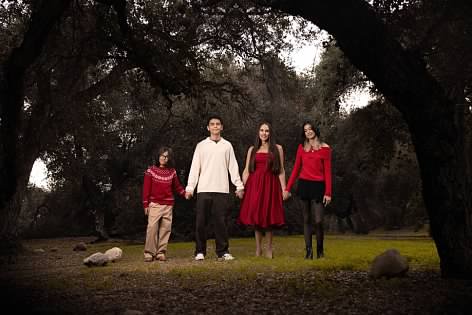
Once a year, typically just after Thanksgiving, I force my three children to dress up (the horror), herd them out the door, and drive off to some outdoor location across town to take family photos. I am somewhat sure they hate it, at least some years. And I get it. There has never been a year that did not involve some drama–last minute wardrobe change, sudden inability to locate proper shoes, something doesn’t fit right, hair is misbehaving, someone ironed a hole in their shirt,  oh no, we’re running late, I said get in the car now, you’re not getting anything from Santa, I mean it…get in the freaking car! You know, that type of vibe. And then there is the herculean task of getting everyone to look at the camera, at the same time, with eyes open, and if the universe allows, maybe even a smile. Maybe not. One of the kids has notoriously mean-mugged every photoshoot for the last decade. But the end results? Always worth it. 

But why? Is it that my children are particularly adorable, angelic, and agreeable, thus making every shot perfection? Of course not. Now obviously I think they are beautiful. What kind of psychopath parent doesn’t think that about their kids? As for myself, I don’t consider myself to be particularly photogenic or even necessarily confident in front of a camera. When a family member once commented, in a completely unsolicited fashion, that I didn’t have what it takes to be a model, I quickly retorted “Well it’s a good thing I have a brain and don’t want to be a model.” My sincere apology to the models out there. I am sure many of you are quite smart…my wrath was not truly directed at you. Anyway, I am more the type to need thirty attempts at a selfie to get a single one with both eyes open. And I am almost always the reason a group needs to take another shot (because either I wasn’t ready or at least one of my eyes wasn’t). So, if it is not my kids, and it’s definitely not me, then what is it that makes family photo shoots such magic?

I’d love to say it is as “simple” as the perfect lighting, setting, timing, angle, shutter speed, etc. creating that beautiful, cohesive, lasting memory. And it is that…and more. The “and more,” is what it represents, which for me is one of those rare moments where my family feels perfect and complete. When I look back on my life and think about the experiences I traversed…cancer, more than a dozen surgeries, poverty, abuse, assault, single parenting, and countless heartbreaks and losses…it shaped the landscape of not only my life, but that of my family as well. Obviously it wasn’t all hardship and grief…becoming the first doctor in my family (sorry, no modeling), being blessed with three children, watching them thrive and be genuinely good people despite illnesses and setbacks, being able to care for some of the most amazing patients alongside truly gifted colleagues, and finding my voice as a social justice advocate. These too have been integral in shaping our family. Now did things end up like I had hoped or envisioned? I’d be lying if I said it did.  But did it end up beautiful and wonderful anyway? Absolutely.  And while perhaps it doesn’t always feel perfect, for a few hours in November each year we get to capture a glimpse of our own type of perfection. A moment made possible by a lifetime of moments, most of which were not particularly “photoworthy,” that came before it. 

Massive shoutout to David Rey Photography for capturing our moments (and for putting up with any shenanigans whilst trying to achieve the perfect lighting, setting, timing, angle, shutter speed, etc). Thank you for truly amazing pictures! IG: @davidreyphoto
SflyProxyVersion 1;

ICE Cold

Why are you always so political? Don’t you ever shut up about this stuff?

No. Not really. I do not.

Advocacy is both a privilege and, some days at least, an occupational hazard inherent to the practice of pediatrics. When we choose to enter the field of pediatrics, it is something that we sign on for, and typically wholeheartedly and knowingly. As such, most of us operate at the intersection of public health and social justice on a daily basis. It is who we are as pediatricians.

So I’m going to need everybody to temporarily suspend their disbelief and stop acting brand new when you see pediatricians, in particular those that advocate loudly for collective liberation, raising their voices on behalf of children and families. While I would argue that being a person is innately political, especially in our current climate, being a pediatrician has always been political and likely always will be.

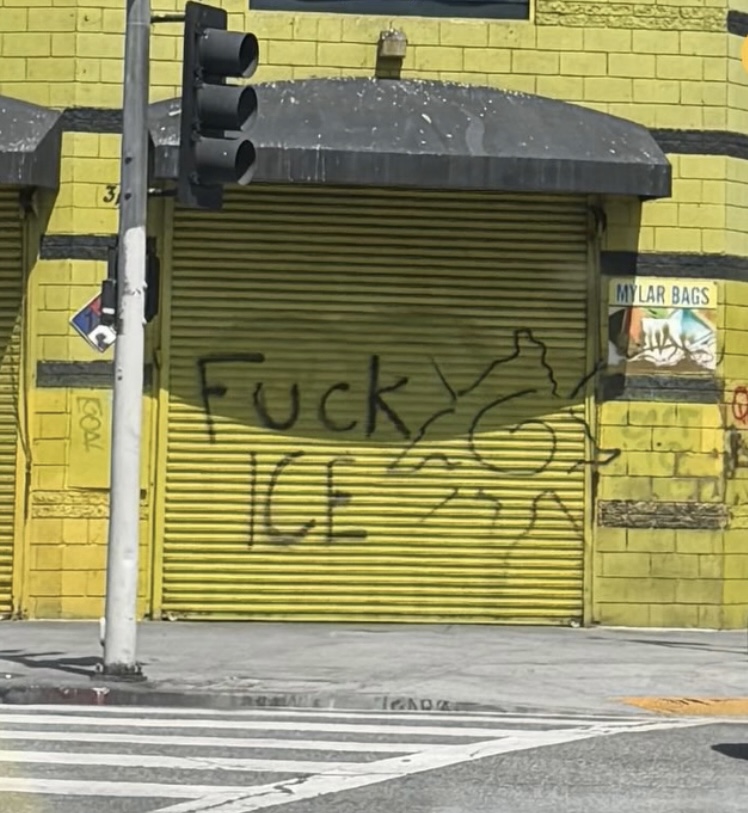
As someone who runs a resilience building clinic in one of the largest federally qualified health centers in the country, and as an Angeleno, the recent ICE raids have been deeply gut-wrenchingly disturbing, personally and professionally. My niche is trauma and resilience building, which forces me to confront the layers of complexity and nuance that go beyond simply ripping families apart, which of course should be reason enough for distress. 

Now you might be asking yourself why I choose to run a resilience building clinic. Isn’t talking about and/or thinking about trauma a set up for perpetual burnout, moral injury, and compassion fatigue? Perhaps. But as I tell our pediatric residents,  when practicing the art of medicine in a sustainable fashion, it’s necessary to examine our “why.” So it’s something that I’ve spent a lot of time thinking about and talking about in recent years. Without forcing you too far down the rabbit hole of research, I will try to be as succinct as my typically verbose self will allow. For starters, we know that adversity and trauma can predispose to a number of health outcomes in adulthood, everything from asthma, obesity, cancer, type two diabetes, mental health issues, cardiovascular disease, autoimmunity, and many more. But we also know that resilience building, especially that which is focused on resources, social determinants of health, and education about lifestyle and facets of resilience (diet, exercise, mindfulness, nature, community, etc) can help mitigate some of these poor health outcomes in adulthood. So simply put, I do what I do because I know that it can help make a difference for my patients long after they walk out of our pediatric clinic for the last time and embark on adulthood. 

Helping patients and families build resilience, despite having experienced unspeakable trauma, is one of the most rewarding things I’ve done in my lifetime. But damn if this current dystopia isn’t making it really hard to help people in the setting of a major source of ongoing trauma, ICE raids and the threat of deportation.

And the inconvenient truth of intersectionality, means that adversity does not occur in a vacuum. Unfortunately, it occurs in the milieu of all of the other sources of stress, adversity, and inequity for families. Even putting all that aside and focusing purely on deportation-related trauma, it behooves us to remember that this also occurs against the backdrop of likely migration trauma, which we know is a common phenomenon in our community. Not to mention the trauma and adversity that was likely the impetus for a family fleeing, and/or potentially seeking asylum in the first place. When you then factor in intergenerational trauma, you can see how each layer compounds the baseline toxic stress. Now enter stage right a new(ish) horror, the trauma of ICE raids and subsequent parental estrangement, and the compilation of adverse events is truly dizzying. And unfortunately, these adverse events act in a dose-dependent fashion, increasing even further the likelihood of poor health outcomes in the future. Plus thanks to a phenomenon known as epigenetics, the sequelae of these events can be inherited and passed on for generations to come at the literal DNA level. Why do I feel like I’m filming an infomercial for bonus trauma? “But wait, there’s more…all for the low cost of free ninety-nine.”

Now some of you need no reminder, as you tirelessly raise your voices for collective liberation, heavy on the “collective.” But for everyone else, here is a quick and dirty refresher. We are on stolen land. We exist through the legacy of enslaved people. Apart from indigenous people, we are all either immigrants or descended from immigrants. 

If we want to truly embody empathy and fight for equity, it necessitates dismantling systemic oppression. There’s not really a way around that. Unfortunately there is no shortcut here.

Many of the laws governing our carceral system are rooted in white supremacy. ICE is rooted in white supremacy. 

Anti-intellectualism/anti-science has always been a tool of white supremacy. They use it because it works. The only way to combat that is with knowledge and data. Likewise, deflection and distraction are age-old tools in the white supremacy tool kit. We must not let them control the narrative, as we’ve seen all too often how it takes on a life of its own, eclipsing the real issues. No doubt you have noticed that burglary is simply regarded as “burglary,” except when it occurs in reasonable proximity to anyone fighting for social justice. Then it is magically “looting.” And as I began to experience again this weekend, Overwhelm is also a tool of white supremacy. It is intentional. But as a very wise colleague reminded me, we can’t let the overwhelm consume us, but rather must focus on what it is that we can control. So as for me, apart from advocating, raising awareness, and droning on about trauma, I can continue helping individual patients and families build resilience. And perhaps if I have any strength left, I can find it within me to continue to hope for an eventual future that does not require so much resilience of people.