Photoworthy

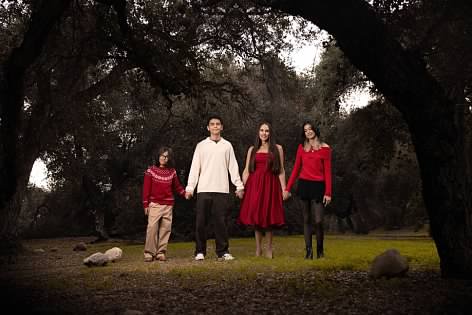
Once a year, typically just after Thanksgiving, I force my three children to dress up (the horror), herd them out the door, and drive off to some outdoor location across town to take family photos. I am somewhat sure they hate it, at least some years. And I get it. There has never been a year that did not involve some drama–last minute wardrobe change, sudden inability to locate proper shoes, something doesn’t fit right, hair is misbehaving, someone ironed a hole in their shirt,  oh no, we’re running late, I said get in the car now, you’re not getting anything from Santa, I mean it…get in the freaking car! You know, that type of vibe. And then there is the herculean task of getting everyone to look at the camera, at the same time, with eyes open, and if the universe allows, maybe even a smile. Maybe not. One of the kids has notoriously mean-mugged every photoshoot for the last decade. But the end results? Always worth it. 

But why? Is it that my children are particularly adorable, angelic, and agreeable, thus making every shot perfection? Of course not. Now obviously I think they are beautiful. What kind of psychopath parent doesn’t think that about their kids? As for myself, I don’t consider myself to be particularly photogenic or even necessarily confident in front of a camera. When a family member once commented, in a completely unsolicited fashion, that I didn’t have what it takes to be a model, I quickly retorted “Well it’s a good thing I have a brain and don’t want to be a model.” My sincere apology to the models out there. I am sure many of you are quite smart…my wrath was not truly directed at you. Anyway, I am more the type to need thirty attempts at a selfie to get a single one with both eyes open. And I am almost always the reason a group needs to take another shot (because either I wasn’t ready or at least one of my eyes wasn’t). So, if it is not my kids, and it’s definitely not me, then what is it that makes family photo shoots such magic?

I’d love to say it is as “simple” as the perfect lighting, setting, timing, angle, shutter speed, etc. creating that beautiful, cohesive, lasting memory. And it is that…and more. The “and more,” is what it represents, which for me is one of those rare moments where my family feels perfect and complete. When I look back on my life and think about the experiences I traversed…cancer, more than a dozen surgeries, poverty, abuse, assault, single parenting, and countless heartbreaks and losses…it shaped the landscape of not only my life, but that of my family as well. Obviously it wasn’t all hardship and grief…becoming the first doctor in my family (sorry, no modeling), being blessed with three children, watching them thrive and be genuinely good people despite illnesses and setbacks, being able to care for some of the most amazing patients alongside truly gifted colleagues, and finding my voice as a social justice advocate. These too have been integral in shaping our family. Now did things end up like I had hoped or envisioned? I’d be lying if I said it did.  But did it end up beautiful and wonderful anyway? Absolutely.  And while perhaps it doesn’t always feel perfect, for a few hours in November each year we get to capture a glimpse of our own type of perfection. A moment made possible by a lifetime of moments, most of which were not particularly “photoworthy,” that came before it. 

Massive shoutout to David Rey Photography for capturing our moments (and for putting up with any shenanigans whilst trying to achieve the perfect lighting, setting, timing, angle, shutter speed, etc). Thank you for truly amazing pictures! IG: @davidreyphoto

SflyProxyVersion 1;

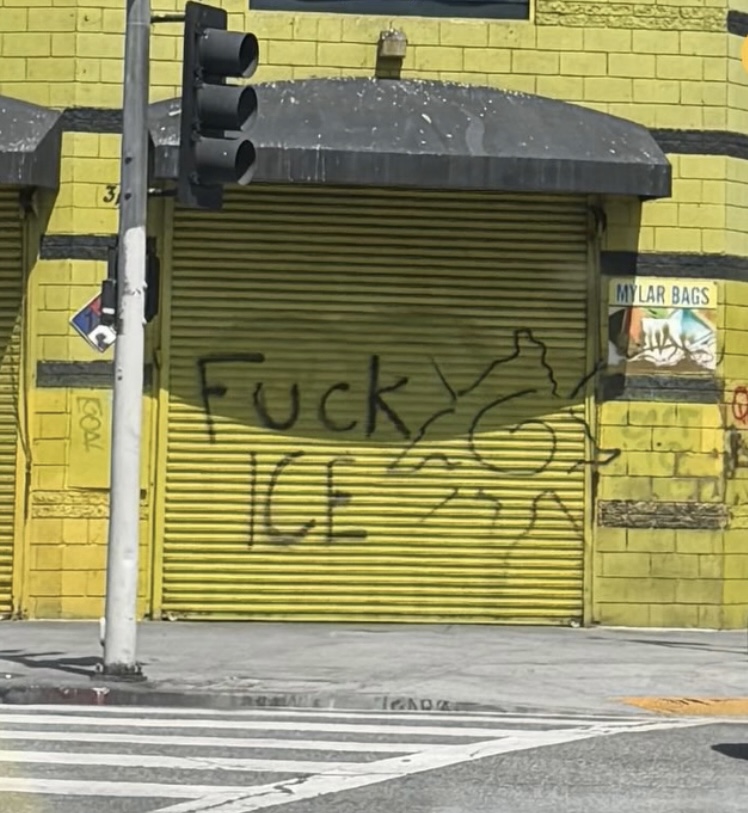
ICE Cold

Why are you always so political? Don’t you ever shut up about this stuff?

No. Not really. I do not.

Advocacy is both a privilege and, some days at least, an occupational hazard inherent to the practice of pediatrics. When we choose to enter the field of pediatrics, it is something that we sign on for, and typically wholeheartedly and knowingly. As such, most of us operate at the intersection of public health and social justice on a daily basis. It is who we are as pediatricians.

So I’m going to need everybody to temporarily suspend their disbelief and stop acting brand new when you see pediatricians, in particular those that advocate loudly for collective liberation, raising their voices on behalf of children and families. While I would argue that being a person is innately political, especially in our current climate, being a pediatrician has always been political and likely always will be.

As someone who runs a resilience building clinic in one of the largest federally qualified health centers in the country, and as an Angeleno, the recent ICE raids have been deeply gut-wrenchingly disturbing, personally and professionally. My niche is trauma and resilience building, which forces me to confront the layers of complexity and nuance that go beyond simply ripping families apart, which of course should be reason enough for distress. 

Now you might be asking yourself why I choose to run a resilience building clinic. Isn’t talking about and/or thinking about trauma a set up for perpetual burnout, moral injury, and compassion fatigue? Perhaps. But as I tell our pediatric residents,  when practicing the art of medicine in a sustainable fashion, it’s necessary to examine our “why.” So it’s something that I’ve spent a lot of time thinking about and talking about in recent years. Without forcing you too far down the rabbit hole of research, I will try to be as succinct as my typically verbose self will allow. For starters, we know that adversity and trauma can predispose to a number of health outcomes in adulthood, everything from asthma, obesity, cancer, type two diabetes, mental health issues, cardiovascular disease, autoimmunity, and many more. But we also know that resilience building, especially that which is focused on resources, social determinants of health, and education about lifestyle and facets of resilience (diet, exercise, mindfulness, nature, community, etc) can help mitigate some of these poor health outcomes in adulthood. So simply put, I do what I do because I know that it can help make a difference for my patients long after they walk out of our pediatric clinic for the last time and embark on adulthood. 

Helping patients and families build resilience, despite having experienced unspeakable trauma, is one of the most rewarding things I’ve done in my lifetime. But damn if this current dystopia isn’t making it really hard to help people in the setting of a major source of ongoing trauma, ICE raids and the threat of deportation.

And the inconvenient truth of intersectionality, means that adversity does not occur in a vacuum. Unfortunately, it occurs in the milieu of all of the other sources of stress, adversity, and inequity for families. Even putting all that aside and focusing purely on deportation-related trauma, it behooves us to remember that this also occurs against the backdrop of likely migration trauma, which we know is a common phenomenon in our community. Not to mention the trauma and adversity that was likely the impetus for a family fleeing, and/or potentially seeking asylum in the first place. When you then factor in intergenerational trauma, you can see how each layer compounds the baseline toxic stress. Now enter stage right a new(ish) horror, the trauma of ICE raids and subsequent parental estrangement, and the compilation of adverse events is truly dizzying. And unfortunately, these adverse events act in a dose-dependent fashion, increasing even further the likelihood of poor health outcomes in the future. Plus thanks to a phenomenon known as epigenetics, the sequelae of these events can be inherited and passed on for generations to come at the literal DNA level. Why do I feel like I’m filming an infomercial for bonus trauma? “But wait, there’s more…all for the low cost of free ninety-nine.”

Now some of you need no reminder, as you tirelessly raise your voices for collective liberation, heavy on the “collective.” But for everyone else, here is a quick and dirty refresher. We are on stolen land. We exist through the legacy of enslaved people. Apart from indigenous people, we are all either immigrants or descended from immigrants. 

If we want to truly embody empathy and fight for equity, it necessitates dismantling systemic oppression. There’s not really a way around that. Unfortunately there is no shortcut here.

Many of the laws governing our carceral system are rooted in white supremacy. ICE is rooted in white supremacy. 

Anti-intellectualism/anti-science has always been a tool of white supremacy. They use it because it works. The only way to combat that is with knowledge and data. Likewise, deflection and distraction are age-old tools in the white supremacy tool kit. We must not let them control the narrative, as we’ve seen all too often how it takes on a life of its own, eclipsing the real issues. No doubt you have noticed that burglary is simply regarded as “burglary,” except when it occurs in reasonable proximity to anyone fighting for social justice. Then it is magically “looting.” And as I began to experience again this weekend, Overwhelm is also a tool of white supremacy. It is intentional. But as a very wise colleague reminded me, we can’t let the overwhelm consume us, but rather must focus on what it is that we can control. So as for me, apart from advocating, raising awareness, and droning on about trauma, I can continue helping individual patients and families build resilience. And perhaps if I have any strength left, I can find it within me to continue to hope for an eventual future that does not require so much resilience of people.

Chasing Sunsets

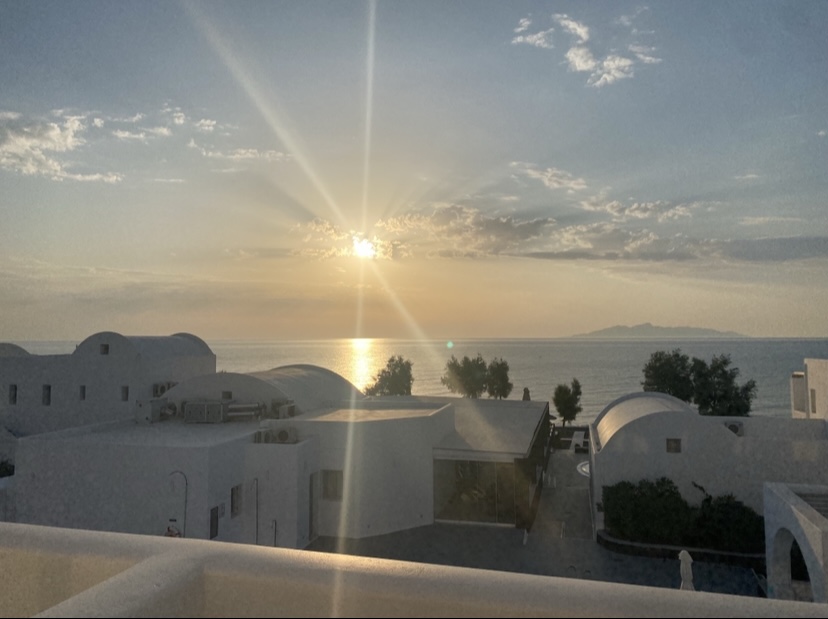
I recently celebrated a birthday and must admit I always find birthdays a little bittersweet. When I was in my twenties (and for a moment we’ll pretend that wasn’t so long ago), I used to regard that bittersweetness as the result of a remote traumatic experience that occurred on my birthday. But having done the work of healing, and as I got older, I recognized the sentiment was rooted in something seemingly deeper, yet in a way, much simpler. It is somewhat analogous to a sunset which, while beautiful, still represents an end. A birthday signals an opportunity to reflect on where I have been, who I have been, what I have accomplished, and how far I still have to go. What will that next sunrise look like? It’s a chance to be grateful for the tremendous things I have overcome in my life, as well as for the amazing friends who have accompanied me on this journey. It’s a chance to revel in the memories and experiences of the last year(s)…every beautiful sunset…while still acknowledging the occurrences of trauma, loss, or pain that can punctuate any number of the preceding 365 days. 

Like many of you, I am no stranger to the fact that pain, change, and loss, despite being part of life and God’s plan, can be hard as hell sometimes. Recognizing how far we have to go individually, and how much work we need to do as a loving, empathetic, selfless society, can feel overwhelming. And even the most eager to attain growth and progression…those ready to advocate for themselves and others…can sometimes feel as if they are standing still. 

Those bittersweet moments of taking stock require a tremendous amount of grace and love, not to mention an insane dose of patience (often in short supply). I have always clung to the notion that most things happen for a reason, according to a plan for which, ironically, none of us has the blueprints. That said, I think we can all agree that sometimes things happen that are so difficult, painful, unexpected, seemingly senseless, that it’s hard to imagine there could ever be a reason that could do it justice. Is there always a lesson in death, war, violence, and loss? However, I suppose these are occupational hazards of operating in a world with free will…which admittedly feels like a fancier version of “it is what it is.” Yet it is also that same free will that allows us to make choices that hopefully, if we choose wisely, allow us to live in authenticity and love.

So for this next year the best gift I can give myself is for my actions and inactions to continue to reflect and foster the life I am building for myself and my children, and I pray for grace and love throughout this next trip around the sun. May God grant that the less palatable, painful moments be tempered with an abundance of sweetness and some beautiful views of the sun.

The Unexpected Detour

After an oncology appointment this week, I finally took a moment to reflect on the last year(ish) of my life. In the last 15 months, I have had one surgery, two MRIs, two PET/CTs, two other CT scans, two mammograms, an ultrasound, an ECHO, two biopsies, and a colonoscopy. No partridge or pear tree needed. With each of those there came the requisite waiting for results, and in some cases recovering from the procedure or occasional complications. To say that I am fucking exhausted is a ridiculous understatement. Navigating it all while single-parenting, doctoring, and trying to balance the schedule tetris of life adds a whole other layer of emotional fatigue. Additionally, when I consider other concurrent stressful transitions or moments of grief, loss, and trauma for myself, my family, and my friends, I must acknowledge  it felt overwhelming at times. 

But, and I don’t say this flippantly, I got through it. Please don’t ask how, because this time I legitimately don’t know. I honestly feel as if this oncologic version of “if you give a mouse a cookie,” with its near Herculean balancing act, was borderline crazy-making some days.

However, despite the sheer physical, emotional, and spiritual exhaustion, I’m also extremely grateful to have such a great medical team and loving, supportive people in my life. And I am so thankful my most recent imaging shows no evidence of disease. While that alone is fantastic news, the additional blessing is that I now get to decrease the amount of surveillance, imaging, and procedures. I do still have three studies/procedures left in the next month or so, and I’m not looking to jinx anything. But I feel somewhat justified relishing in a sigh of relief (possibly with a side of tears as I decompress).  

I cannot begin to adequately express my gratitude to those friends, family, and colleagues who have been part of this significant bump in my meandering journey. Whether by being present, checking in on me, driving me to/from the hospital, distracting me (in a good way), being available, or holding space for me, your love and support is the only reason I got through this unexpected detour. I love you all. Thank you.

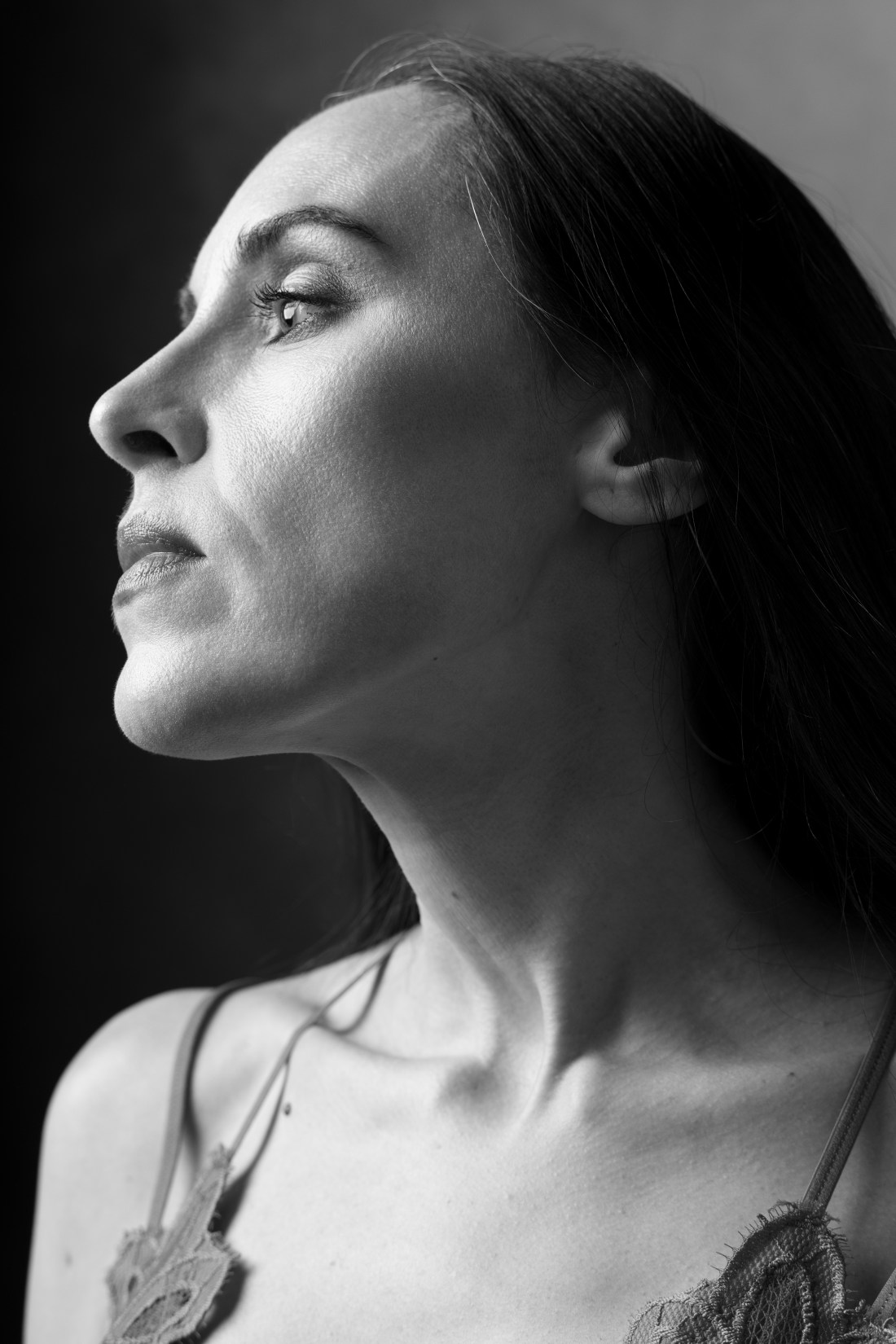
A note about this picture: In the past 7 years, this portion of my head/neck has been imaged a dozen times. When I was reviewing pictures with Zachary Lee during a photo reveal, I admit I initially felt a twinge of resentment when I first saw these particular images. But he reminded me they encapsulate strength, changing my perspective about the betrayal we may sometimes feel when our bodies and health don’t cooperate with our vision of life. Special thank you to @zacharyleeportrait 🙏🏼

Philosophizing in the Rearview

When reflecting on 2022, there were moments so crazy that it’s almost easier to close the door firmly on the year, lock it,  and never look back. As I waxed poetic in a prior post, “don’t look back….your direction is forward.” But, for better or worse,  my insufferable inner philosopher simply will not allow for that. So here I am, forced to at least partially process the year that lay behind me. Truth be told I suppose the same could be said at the end of any year, because who amongst us truly lives a boring life? No one? Yeah, I didn’t think so. 

Since I can’t cheat the proverbial process, I decided to revisit some of my prior musings on the topic of finding meaning…aka making some minimal fucking sense of the chaos. In general it appears we choose one or more of three options when reflecting on life experiences. 1. We can choose to believe that a higher power, such as God, the universe, or karma “made,” our life events happen, perhaps (to take it a step further) even as a reward or punishment for various things. 2. We can choose to believe that a higher power “allowed,” for certain events to transpire, in the backdrop of other notions, such as having free will or being subject to the laws of nature/science. 3. We can choose to believe that events are merely due to chance, and that events are either random lucky, or unlucky, occurrences. 

The most important point, though, is that each one of us has a choice to make. And it is that very choice that can help us transcend from merely surviving life and it’s various events to thriving, because of those events. The use of the word, “because,” instead of “despite,” is intentional, though I sometimes think of them interchangeably. In the past I used to think “despite X circumstance, I accomplished Y.” And there are definitely times during which that was the case. For instance, despite my child’s blood sugar dropping precipitously during our morning commute, I still made it to work in time for my first patient (albeit a few minutes later than intended). But there are other instances in which I, like all of us, accomplished something because of some adverse event. These are usually the cases in which our path was altered in a different direction due to some experience. It’s not the same as starting a task, getting derailed by an event, and getting back on that same track. Rather, it is when we pursue something, find ourselves derailed, and use that derailment to veer in an entirely new direction. It involves a conscious choice to take what we have learned from that adversity, incorporate it into the larger schema of who we are, and allow it to propel us in a new direction. 

I firmly believe that if I chose to believe option two, that some higher power “allowed,” for life events, within the confines of free will and nature/science, then I can at least begin to find meaning in even the worst experiences. This mindset causes me to reflect on occurrences and trust that something/someone bigger than me felt that I could endure said event and have the opportunity to learn from it. As such, I might even have the potential to show empathy and/or pass on knowledge to others. 

This concept also forces me to consider the role of free will and examine my role in an event, thereby keeping me accountable. And it reminds me to consider the autonomy and free will of others, which highlights the roles they may have played in my experiences, helping me discern which things were beyond my control. Hopefully, this aids in self-forgiveness and mitigating shame. However, being simultaneously accountable for our actions and aware of our limitations takes a tremendous amount of insight and practice. Likewise, with certain events, contemplating the role of nature/science humbles us by reminding us again of what we can and cannot control and of the importance of being prepared. Furthermore, belief in a higher power guiding our experiences can foster gratitude for the times when the free will of others resulted in helpful, kind, supportive, and loving acts towards us, as well as thankfulness for times when science and nature are cooperative in our lives. 

And the mere act of believing, in and of itself, is very powerful. Belief takes hope one step further. Hope is rooted in wanting or desiring something and, as such, entertaining it as a possibility. To believe involves taking potential and knowing, at your core, it can be actualized into reality. It is what we do when we not only put something out into the universe, but we know it can be. We can visualize it. It propels us forward and helps buffer hardship.

Now does this mean choosing this option is the best possible choice, purely because I (a random stranger with zero authority on the subject) say so? Um no. Absolutely not. It is honestly one person’s mildly convoluted, meandering opinion amongst many. Am I being overly dismissive of options one and three? Probably, though it is mostly for the sake of brevity. And just because I choose to believe this way, it does not mean I have remotely come close to mastering the process of sorting through the stuff of life and ascribing meaning or using those experiences to better myself or others. To say that cultivating these skills is a work in progress is a gross fucking understatement. I still have a tremendous journey ahead of me and a lot of work to do. And although some days I feel I have come a million miles in my somewhat short life, other days I feel as if I have so much more to do…as if there is so much more in me to give. There are still seemingly countless things I long to do and see and accomplish.

However, regardless of those things I have penciled in my own agenda, I will have to remind myself to be open to the events and people that are part of a higher agenda. Because sometimes those serendipitous detours are the exact things that, rather than merely lead us to where we need to be, help us become who we need to be. For that reason alone, I can be grateful for every bump in the road, even those that humbled me more than expected. And I do feel extremely blessed that amidst the year’s chaos were some amazing, blissful moments of connection with friends and loved ones that made it not merely just bearable but worth it all. Happy New Year! May this next year be filled with growth, blessings, and love. 

An Untimely Blessing

Sometimes God blesses you with people during defining periods in your life…moments punctuated by sadness, fear, grief, suffering…but also highlighted by love, growth, progress, insight, and eventual peace. Such was the time in my own childhood when I gained my stepfather, somewhere in the mix of having cancer and my mom suffering two (yes two) severe concussions.

After my mom’s second traumatic brain injury, she had significant worsening of her vertigo, short-term memory loss, and balance issues, and was unable to work for quite some time. That year she was forced to spend a lot of time in bed.  Although she was not as readily able to engage in whatever middle school antics might be going on, my stepfather was more than willing to fill in any gaps, supporting me, driving me to lessons, doing the cooking and cleaning and other managerial household tasks that previously fell to the default parent. If I forgot my lunch or my cello, he was the one who drove them to me. A few years later, when the time ultimately came for me to learn to drive, it was he who took on that (surely) terrifying task. When my third cancer surgery solidified my desire to pursue medicine, it was he who found me a physician mentor. And it would be his example of love and partnership that would forge my own understanding of what it means to be a good, loving, supportive, present partner through both good and bad times. My only real complaint about him, well the only complaint substantive enough to stick in my mind, were his consecutive dinners of dry, tasteless turkey breast. For the love of God, please use some spices or sauce or something! Ok, I admit I feel a little bad saying that about my late stepfather’s turkey breast. God rest his soul (my stepfather, not the turkey). 

More importantly, not only did my stepfather hold our family and household together, he and I became closer as a result. Prior to middle school, I was not accustomed to having a daily father figure in my life, seeing my own father only every other weekend. However, my stepfather stepped in and treated me like his own, forever redefining for me the true meaning of family. It never mattered to him that we did not share DNA, his love was just as real. The outside observer would have never known he was not my biological father. So I have always felt quite fortunate that my stepfather was so amazing. Unfortunately, he set the bar a bit high, as I would learn decades later that many men have no interest in embracing the role of a stepfather. Both at that time, and even more so now, I recognized the blessing he was in my life.

Although he gained his wings in 2005, a few months before I graduated medical school, he lives on in my heart. Happy 75th birthday to my stepfather in Heaven. You truly were a one of a kind blessing!

Beyond The Least Interesting Thing

Sitting across the table from a friend, casually drinking coffee, I found myself explaining the reason I had several operations as a child. Quite nonchalantly and without so much as a momentary pause for a breath, I mentioned that I had cancer. He interrupted with a sympathetic comment, and I quickly pushed through the story, brushing off his attempt to comfort me. Perhaps if I could rush through the story, it would mask the fact that I was overtly trying to minimize or downplay my experience. I felt uncomfortable. But why?

      Later, once I was back home, I reflected upon that interaction. Was it that I was uncomfortable being vulnerable? Unlikely. I have shared that same story many times. And I have always been open and honest, nearly to a fault. I did not know this friend well, so it is not as if he had hurt me in any way in the past to cause me to feel guarded. So why did I feel such discomfort in that moment? This was not the first time I had experienced this same visceral urge to brush aside another person’s attempt at sympathy or empathy upon hearing I had cancer. This was a pattern. Suddenly I recognized why.

      It is classic imposter syndrome, with a helping of survivor guilt thrown in for good measure. Although I have had a lot of surgery and more screening, testing, and biopsies than I can keep track of over the years, I never had chemo or lost my hair or had any of the typical untoward side effects from chemo, radiation, or hormonal or immunologic therapies. I felt like a fraud, as if I was not really a true cancer survivor. And even if I used the term survivor to describe myself, I felt I was not the same as another who had experienced “more.” 

     However, there was something even deeper going on in my psyche than mere imposter syndrome and survivor guilt. It was the knowledge that cancer was actually one of the better things that happened to me. This is not only because it led me to my career in medicine. It is because many of the events that followed that time in my life were far more harmful, painful, and dark than my experience of cancer had been. It is as if my discomfort was really signaling that my friend, or anyone else for that matter, should not waste their sympathy on my cancer story, because the story that remained untold was far more sinister. But I scarcely processed those thoughts in that moment, let alone thought to tell my friend to reserve his sympathy. 

That said, I can honestly say to either a friend or stranger, that there is no need for sympathy at all. Not for cancer. Not for any of the other sad or scary moments of this story. For every one of those events ultimately leads to a larger purpose. Now while I believe there is something to be said for reframing hardships in a positive light, it would be inauthentic to sugar-coat those events. It is by living through the darkness that we gain deeper gratitude for the light. So instead of dismissing the pain of certain life events, I have acknowledged it. I have owned it. I have sat with it. I have cried, grieved, processed, laughed at times, and healed (or continue to heal) from it. And after I allowed it to become part of my identity, I regarded those things on the spectrum of interesting things. So while it might sound flippant to refer to such a huge part of my identity as the least interesting thing, it underscores that cancer is only one layer of a multifaceted story of adversity and resilience.

Time Travel Jet Lag: Unpacking 4 Different Perspectives

TW: sexual assault, abuse

I am not sure if it was the serious jet lag from twenty-four hours of transit across nine time zones, or the rough reentry and integration back into anything-but-normal life. Or perhaps it was the brutal stripping away of female reproductive rights and the threat of repealing so many other human rights, all whilst ensuring that the leading cause of death in children will continue to be gun violence. Who knows? Could be a combo of all of these. In light of these dystopian gems, plus life in general right now, perhaps it is not surprising that it has taken me a full week to process just the tip of the iceberg of emotion brought on by the events of this past week. 

But as a pediatrician whose clinical niches are trauma/adversity, resilience, and equity, as well as children with medical complexity… and as a survivor… it is time to emerge from the brain fog of this past week. Personally and professionally there are so many layers of this to unpack, that it made unpacking the actual luggage from my recent trip seem far less daunting by comparison. And like all unpacking, there is bound to be at least a little dirty laundry. 

One of the realities of caring for children with special healthcare needs is that for a certain subset of my patients, a pregnancy could be catastrophic, resulting in death of both my adolescent patient and the fetus. Additionally, my patients with intellectual disability, severe autism, or other neurodevelopmental disabilities are already at higher risk of sexual assault, which is, in and of itself, a terrifying experience for them. Now try to imagine the added horror of becoming pregnant for a patient with limited cognition and/or traditional verbal capacity. My own mind cannot process that fully. Maybe it’s the jet lag.

Furthermore, and please bear with my science nerd perspective for a minute, my work in trauma/adversity, resilience, and equity is aimed at the goals of screening for these factors and helping patients and families build resilience, nurture buffering caregiver/child relationships, and address disparities in social emotional determinants of health (food, housing, transportation, insurance, & other financial or social justice issues). Without going too far down the physiology rabbit hole, adverse childhood experiences (referred to as ACEs), especially when unbuffered and untreated, can lead to chronic activation of the stress response. And that constant “fight or flight,” dynamic can lead to future poor health outcomes such as asthma, obesity, cardiovascular disease, high blood pressure, cancer, depression, anxiety, substance use disorders, and others. As such, childhood adversity poses the single greatest threat to the future health and well-being of our children. To add intergenerational insult to injury, trauma can cause actual changes in the DNA (referred to as epigenetic changes) that can be transmitted to future generations; an ancestral curse in the truest sense. Thus, by forcing a mother to carry an unwanted pregnancy, with its implications for intergenerational poverty and widening disparities, especially within the BIPOC community, our country is actually legislating trauma and adversity for our patients and future generations. I certainly did not order the trauma special with a side of racism, so if you could take it off the menu, that’d be great!

As if all of that is not ominous enough, there are still a few other layers worth unpacking. Please excuse me while I take off my white coat and scrubs for a moment to lend a different, more personal, perspective. In other words, it’s about to get a little more real.  When I was in my third trimester with my youngest child, I noticed a small growth at my jawline. Initially thinking it was probably a pimple, and given I was on bed rest, it was convenient to simply ignore it. However, it never really declared itself as a pimple, and it persisted and grew, likely thanks to all those fun pregnancy hormones. It turns out that what I had initially dismissed as a pimple, ended up being a rare tumor (now my second rare tumor…but who’s counting?). I was fortunate that it was at the end of my pregnancy, it was relatively slow growing, and it had not metastasized–a trifecta of oncologic good fortune. Under different circumstances, I could have had an extremely difficult decision to make. It is a decision that no mother should ever have to make, but unfortunately it is all too common amongst cancer survivors. Having begun my cancer journey at age eleven, I am grateful to have lived long enough to have three wonderful children. I cannot imagine if that cancer journey had ended during pregnancy, which is now a very real possibility for so many others.

However, cancer survivorship is not the only meandering journey I have traversed (aka stumbled through) in my life. When it comes to vocations, whether due to comfort or serendipity, sometimes you organically find yourself doing what you know. One reason I have gravitated toward work in adversity and trauma is because I, like many of you, have had a little too much experience doing the hard work of overcoming my own past traumas. While those experiences, and the difficult work of surviving and transcending them, are in the past, there’s nothing quite like having your reproductive rights stripped away to remind you of all you have endured. 

By the time I reached double digits, I had been sexually abused, and by the time I reached 20 years of age, I had been raped twice. I was extremely fortunate that I did not end up pregnant, but I cannot begin to imagine how much more difficult my healing journey would have been had I been forced to carry a rapist’s baby. Honestly there are days that I still wonder how I survived abuse, rape, poverty, and cancer to be where I am at today. But then there are other days…days in which the residual sequelae of past trauma are just perceptible enough, at least to me, to remind me that survivorship is a lifelong journey. By the grace of God, the Universe, karma, ancestors, holy water, a lucky penny, and favorable winds, that journey has allowed me to live a life that ensures those past experiences were not in vain. But I can say with reasonable certainty that my ability to not only heal, but to utilize past adversity to ultimately help others, would have been severely impacted by forced pregnancy. So the work of advocacy and activism must be tireless to ensure that every woman has that same chance to not only survive but thrive, despite the intergenerational cycles of trauma and poverty that just became that much harder to break. To that end, it is time to unpack the luggage and get to work, because this jet lag ain’t got nothin’ on time travel back to 1973!

Photo Credit: https://www.zacharyleeportrait.com/

Curtain Call

Center offspring: Mom, sing “Easy Street”

Me (mouth full of salad): No

Center offspring: C’mon Mom

Me: Still no

Pause (to finish salad)

Me: Sings “Maybe”…including both verses. I think he was sorry he asked.

It was then that the irony hit me. My son is preparing for the role of Rooster, in an upcoming performance of Annie. That is the very musical that I used to envision myself starring in on Broadway. Yet it would ultimately be a moment, surrounded by other musicians and thespians, in which I would realize a larger dream.

Poised between the awkward middle school years and exciting, challenging, formative years of college, was this four year timespan that stood between me and “the rest of my life.” High School. It was to be the stepping stone, both necessary and sufficient to get me out of Kansas City. Why you ask? I wasn’t exactly being forced to milk cows or tend to the farm. So why the desire to leave? Well, much of my family was in California, where I had spent a portion of each summer since I was six and first began flying alone to stay with my grandparents. I loved it. It was warm, sunny, big, exciting, diverse. The weather was perfect. I loved the beach. Too young to be cognizant of the cost of living or the drudgery of commuting, I was sold, and there was no going back. I did not realize in high school how long it would actually take me to ultimately move to SoCal, nor how many moves lay in my future. All I knew was that I was Cali bound, one way or another.

Despite being a means to an end (which is how surely many viewed those four years), high school was a lot of fun. I sang in several choirs, played cello, did drama, debate and forensics, went to football games, homecomings, four proms, and hung out with friends as much as possible. Music was a huge part of my life. Perhaps it was fitting that it would be in the large orchestra/band room, in which I spent countless hours of high school, where I would ultimately make my single largest career decision. The irony lay in the fact that this decision would take me very far from music.

My junior year I was having a fair amount of pain in my right hip where I had had my initial cancer surgeries years earlier. To be fair I had never really been completely pain free, which was attributed to post-surgical neuropathy (changes in the nerves in the area of resection). It was not terrible, and it did not limit my activity, at least not any more than my own intrinsic laziness did. But the area near the scar was very sensitive to touch. In fact it was probably fifteen years before I was able to comfortably sleep on my right side, even briefly. I had also developed a keloid (thick, overgrown scar), which added to the discomfort. And from a cosmetic standpoint, it appeared as if I might have had a little run in with a machete. Thank God for the mid-nineties baggy jeans!

Due to my pre-existing condition, we had gone a time without health insurance but thankfully had recently obtained insurance again. My mother took me to a new surgeon at Children’s Mercy hospital, in downtown Kansas City. He said that although he hoped the pain was due to the keloid and neuroma formation (basically due to overgrowth of nerves after prior surgeries), he could not be sure that the pain was not due to recurrence of the sarcoma. So he recommended resection of the affected tissue with revision of the overlying scar. 

We left that appointment, and my mom drove me back (as we Kansas Citians say) “north of the river” to school, as I had orchestra practice. I felt numb on the ride back and made an immediate b line for the orchestra room. As soon as I walked in, wearing my standard issue baggy jeans and navy high school logo jacket, I saw a couple of friends near the door. Having zero ability to conjure up any semblance of a poker face, my distress was transparent. I struggled to get the words out that I might have cancer again and would be having surgery soon. Tears filled my eyes, which I fought against to the best of my abilities. I paused while talking to my friends long enough to have a brief internal dialogue. I do not recall uttering the words aloud, but in that moment I promised myself and God that if I made it through this, I would become a doctor. Suddenly, and for the first time, my pain had meaning and purpose. 

When I was younger and my mom would ask me what I wanted to be when I grew up, my answer was, at least for several years, consistently the same. I wanted to sing on Broadway. I used to stand in our kitchen, chin up, confidently belting out “the sun’ll come out tomorrow” as if I could feel the warm, unforgiving spotlights shining upon me.  It seemed reasonable enough at the time. However, I can say with 100% certainty that, even before I developed vocal cord nodules in high school, and just a few years ago developed paresis (partial paralysis) of one of my vocal cords, this was an unreasonable life plan. But between the ages of say three and ten, this was the plan. 

My mom was also consistent in her response to me. “You can do whatever you like, after medical school.” Was she serious? Absolutely not. We have no doctors in the family. She was not pushing a family business upon me. I do not think we even knew any doctors outside of our own, at least not in a social capacity. Did she actually intend for me to go to medical school to fulfill some parental desire to have a child become a doctor? Nope. But this was her way of informing me that I needed to go to college and get a decent paying job.  Raising me without financial support and no college education, she always reminded me that I needed to be able to provide for myself, without the help of anyone, if at all possible. I honestly think she chose “medical school” as her specific response, because back then the stereotype that doctors make a lot of money was still at least somewhat grounded in reality. That being said, I do not think she ever really thought that I would choose medicine. Rather she just hoped I would choose something that would keep me from living on the streets or on her couch for the rest of my life.

A few weeks after I solidified my overall career trajectory, I underwent my third surgery on my hip. The subsequent week spent awaiting final pathology results, felt like one of the longest weeks of my life. Ultimately the news was good, and the tissue was benign. I was so relieved that I got a small dove tattoo on the opposite hip, as to me the dove signified freedom and peace from cancer. I had thought that would be my last surgery, and that I was now magically granted immunity from cancer. That notion is laughable now, but I cannot blame my sixteen-year-old self for being optimistic. 

Now with that behind me, it was time to uphold my end of the bargain. This was really my first introduction to the concepts of duty, calling, and vocation, and I was fortunate they happened relatively early in my life. Without that gift, and I do truly believe this was a gift, I would have lacked the drive to forge through what was to come in the following years.

Happy National Physicians Day to everyone of you who continues to show up, with the early morning call time, under the unrelenting, hot flood lights (and PPE), front and center stage for your patients!

Photo Credit: https://www.zacharyleeportrait.com/

Not-So-Brutal Honesty

My friends and loved ones know that I am typically not one to mince words. Ever. I have always valued honesty, in the same way that I may have naively assumed that everyone does. It took me many years…scratch that, decades…to realize that not everyone places the same value on full transparency. But even from a young age, I have always been the type to crave the full, at times “brutal” truth. I would much rather (as in, orders of magnitude “rather,”) know exactly what I am dealing with, in all its full glory, or lack thereof. This, no doubt, stems at least partly from my experience of how I learned that I had cancer when I was initially diagnosed at eleven. However, in the interest of brevity, I will have to save that tale for another blog entry.

Back to the present day. As I mentioned, my friends/loved ones usually know what I am thinking and feeling–for better or worse. If I care about you, appreciate you, love you, value you, am upset, confused, hurt…you will know it. And even if I don’t express my gratitude or love verbally as often as I should, I will show you. Am I a perfect friend/loved one? Fuck no. Not even close. But if you are close to me, you will not question my feelings for you. 

Now notice I say “close” friend/loved ones. That is very much intentional. There is no value to giving unsolicited advice or feedback to strangers, apart from an appropriate, welcomed compliment or sharing of useful info, as it pertains to their immediate safety or well-being. Telling some stranger on the street, “I think your shoes are ugly,” while perhaps truthful, is, at best, not useful. Telling a stranger “your fly is down, and also your parking brake must not be engaged, because your car is careening down the street toward traffic,” is…I would argue…beneficial information. 

Similarly, if I feel passionately about a topic, you will probably know that as well. I have survived too many things in my life to hold back, hide, or otherwise stay silent on things that matter. Now do I offend people with my opinions and stances on things? Hell yes! All. The. Time. Will it be worth it in the final analysis? I sure as hell hope so.

Now while doing my best to stand authentically in a place of honesty and transparency, I recently got an unexpected taste of my own medicine–in both literal and figurative ways. And being prone to introspection, which sounds sexier and less judgy than “overthinking,” it gave me pause. I needed that pause to re-evaluate if there is something truly “brutal” in the concept of brutal honesty.

The taste of my own medicine came in three doses, doled out over about six weeks. These seemingly bitter pills came as the following:

  1. “How does it feel to be special?” Now under different circumstances, this might sound flattering. However it is significantly less flattering when it comes from your oncologist, in reference to your unusual medical history, and just before discussing an MRI abnormality.
  2. “This is a lot to digest.” This one was from another specialist in reference to a myriad of findings on a PET/CT scan.
  3. “That was the hardest (procedure) I have ever performed.” This was from another specialist after being unable to complete a medical procedure due to complications.

Now I have to admit there was a small part of me that initially recoiled at those three statements, especially the first and the last. At the moment in which I received the second, I was so tired, both physically and emotionally, that my vibe was very much in sync with the fact that everything was “a lot to digest.” But also it was these variable levels of fatigue that necessitated I process my annoyance, before I could be open to gratitude for the honesty. 

And that is really where the duality of a 32 year cancer journey plays out…in those little moments couched within the larger moments. Those simple words, phrases, or actions taken in the context of the larger picture. The view from 30,000 feet is beautiful, spectacular. It’s a story of survival, and continued survival at that. The gratitude I feel and recognition of how fucking lucky I am, is never far from my mind for long. But on the ground, and sometimes in the moment, it is hard… and tiring… and I am so very over it. Completely. Some days, probably like many of you, I am beyond ready to hang up my cape and relinquish my position as one of the poster children for enduring strength. If you need me, I’ll be at the beach, napping. If only, right? 

And you know what? That is actually OK. After 13 surgeries, 18 biopsies, 12 procedures, 28 MRIs, 6 CT scans, and a PET scan, it is OK to be tired. Hell, I didn’t even get a partridge and a pear tree in that mix! So, it is perfectly fine to want a break from all of it. Furthermore, is OK to not be effusively oozing with glittering gratitude at all moments. It simply is OK. And that is the funny thing about cancer. Even when it is gone…sometimes long after it is gone…you realize that you can never fully walk away from it. So you have to learn to dance somewhere between the 30,000 feet moments of unadulterated appreciation and the “on the ground” reality checks, of which there may be many. 

But the very reason I initially felt annoyed, that experience I will call “survivor fatigue,” is also what ultimately made me appreciate that honesty. The seemingly “brutal” honesty was not actually brutal at all. In fact, it was oddly reassuring. Those words validated all the things I was feeling. That honesty acknowledged the complex nature of my cancer journey. It amplified the experience of all the things my body has endured, even if I have been fortunate to have escaped other treatments or outcomes. It spoke to the humbling fragility of the human body, and the fact that, as physicians, unknowns simply come with the territory.  All three of those doctors knew that I did not choose for my body to be “interesting,” “a lot to digest,” or “difficult.” So the humility and transparency in their words held even more meaning. So as I continue the dance that is this beautiful, real journey, may I remain grateful for those vulnerable, humbling, anything-but-brutal moments of honesty. And thank you to those of you who have chosen to dance alongside me throughout these years! 

Photo credit: Zachary Lee Portrait

https://www.zacharyleeportrait.com/